 English
 Français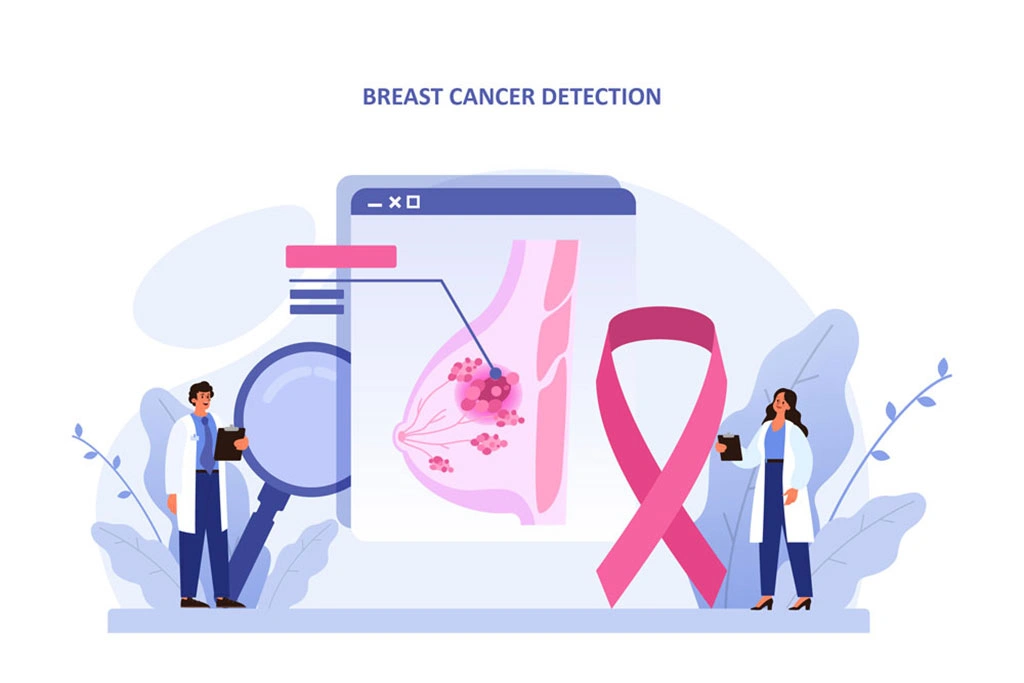
Breast Cancer Detection
The Breast Cancer Detection project is based on a modern and modular architecture, designed to apply deep learning techniques to medical imaging. The application integrates a complete pipeline from data preparation to production, with particular attention paid to reproducibility and experiment tracking.
Architecture
- Models: multiple architectures tested (EfficientNet B3, ResNet50, MobileNet V3, U-Net).
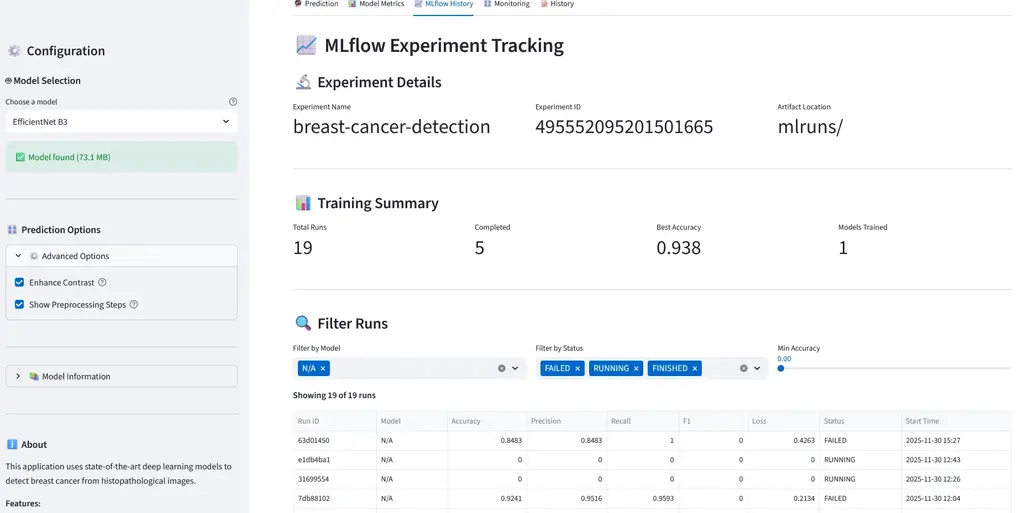
- MLflow: experiment tracking, model versioning, and artifact management.
- DVC: data and model management to ensure traceability and reproducibility.
- Streamlit: professional web interface for predictions.
- FastAPI: REST server for deployment and model serving.
- Docker: full containerization to facilitate orchestration and deployment.
The goal of this project is to develop a deep learning solution capable of analyzing medical images and predicting the presence of breast cancer. This project illustrates the application of artificial intelligence techniques to the healthcare domain, with a focus on medical imaging.
Early detection of breast cancer is a major public health challenge. Medical images are complex, heterogeneous, and require reliable automated analysis to assist practitioners. The challenge is to train robust models capable of distinguishing relevant signals in the images, while managing data variability and avoiding overfitting.
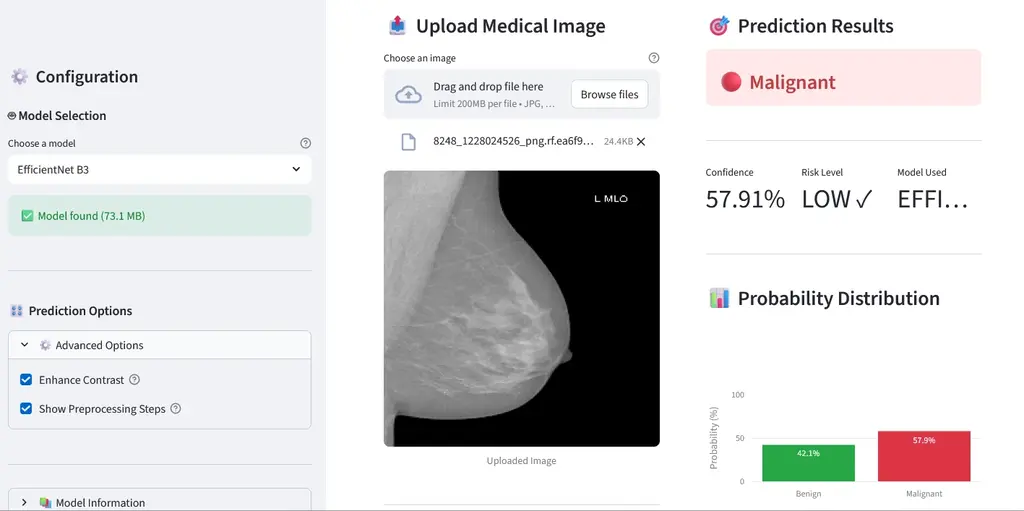
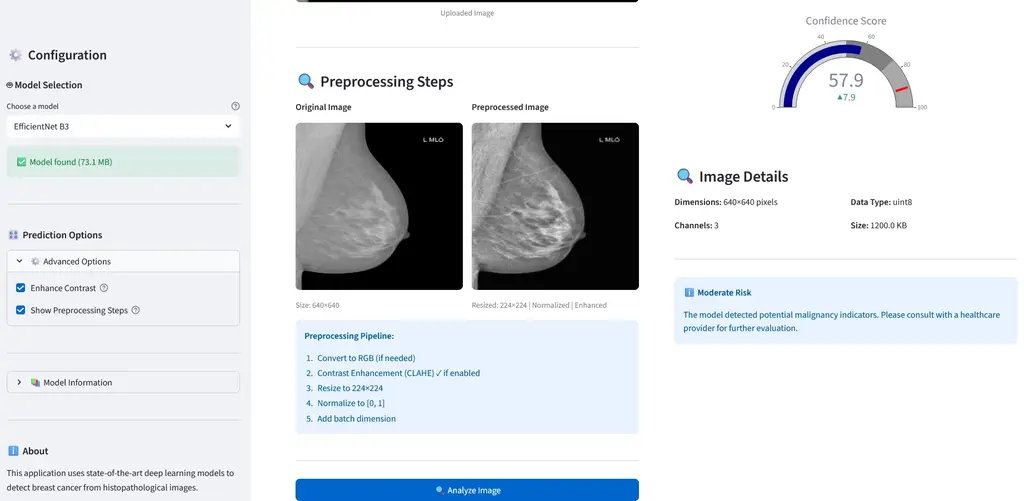
The solution relies on a Streamlit interface that allows users to select the deep learning model they want to test (among several architectures such as EfficientNet, ResNet, or MobileNet). Once the model is chosen, the application provides the ability to upload a medical image and obtain an immediate prediction of the presence or absence of cancer. The interface goes beyond prediction: it also displays performance metrics (accuracy, recall, AUC), the experiment history tracked via MLflow and DVC. This integrated approach turns the project into a truly interactive tool, combining prediction, evaluation, and tracking, making detection more transparent and reproducible.
Key Features
- CNN - image classification
- TensorFlow - Deep Learning
- Streamlit - user interface
- MLflow - experiment tracking
- DVC - data & model management
- FastAPI - REST API for serving